
The Economics and Explosion of the Subscription Economy
Are you subscribed to any services? I can almost guarantee you are. Read this article to learn more about the economics behind the subscription service model, and why it has exploded in popularity in recent years.
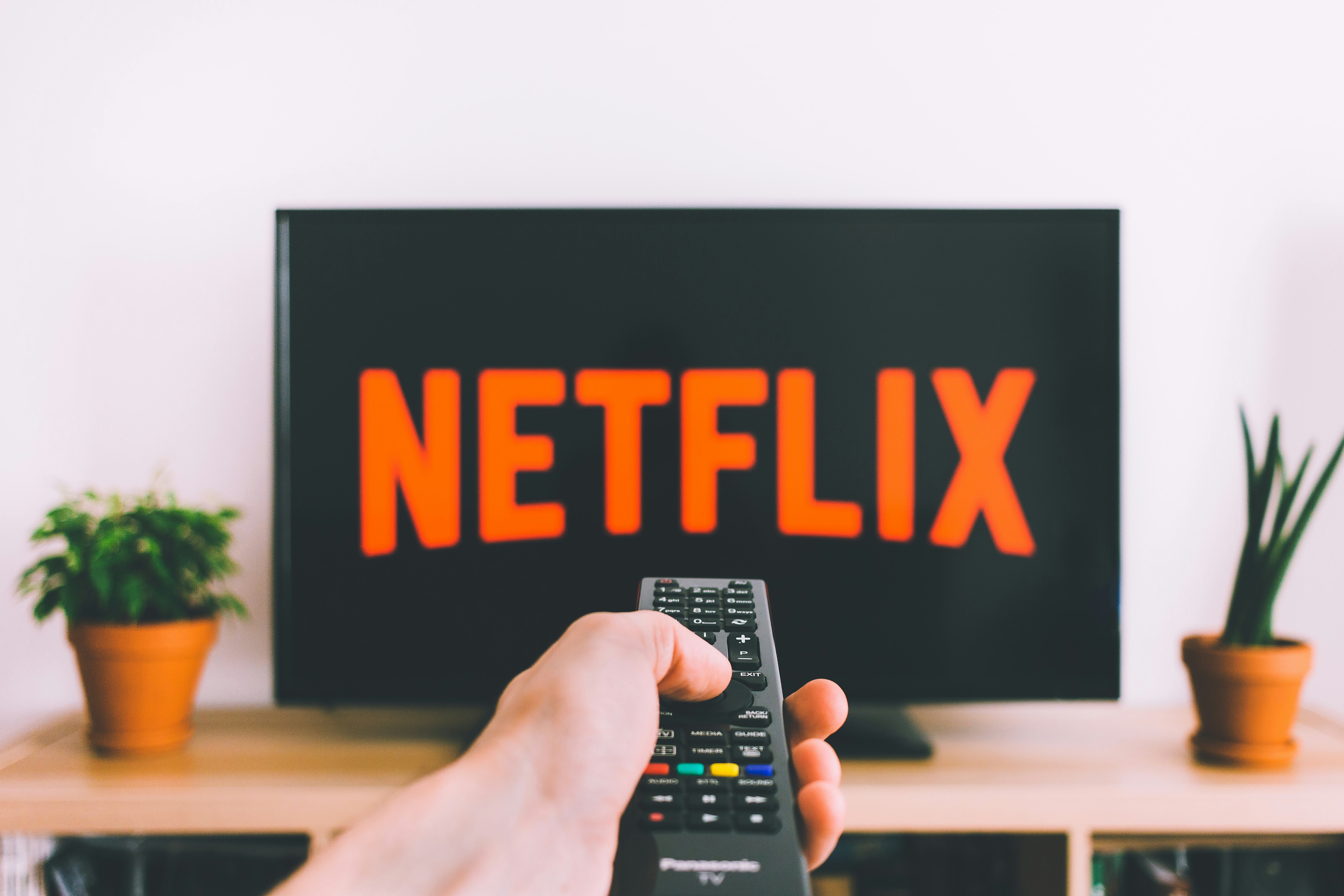
Subscriptions are everywhere, driving a rapidly growing and inescapable market. Think of all the services you might be paying for right now: Netflix, Spotify, Amazon Prime, or ChatGPT. Gen Z is the driver of this economy, with the average member spending $377 a month compared to second place, Millennials, who spend over $100 less per month. This is a direct cause of the subscription revolution, and as generations go on, they are spending more and more on such products. The world has shifted from one in which owning things was customary to one in which large corporations encourage permanently renting access. This begs the question: why has the world shifted to this ephemeral style of ownership, and what are the consequences for us, the consumers? The subscription model has exploded because it offers unmatched financial stability for businesses. However, for consumers, the initial convenience is quickly turning into an expensive behavioral trap known as "subscription fatigue."
First off, why have companies shifted to subscriptions of late? As illustrated in Figure 1, the subscription market has ballooned recently, surpassing a peak of 600 billion dollars. This number is also expected to reach upwards of 1.9 trillion by 2035.
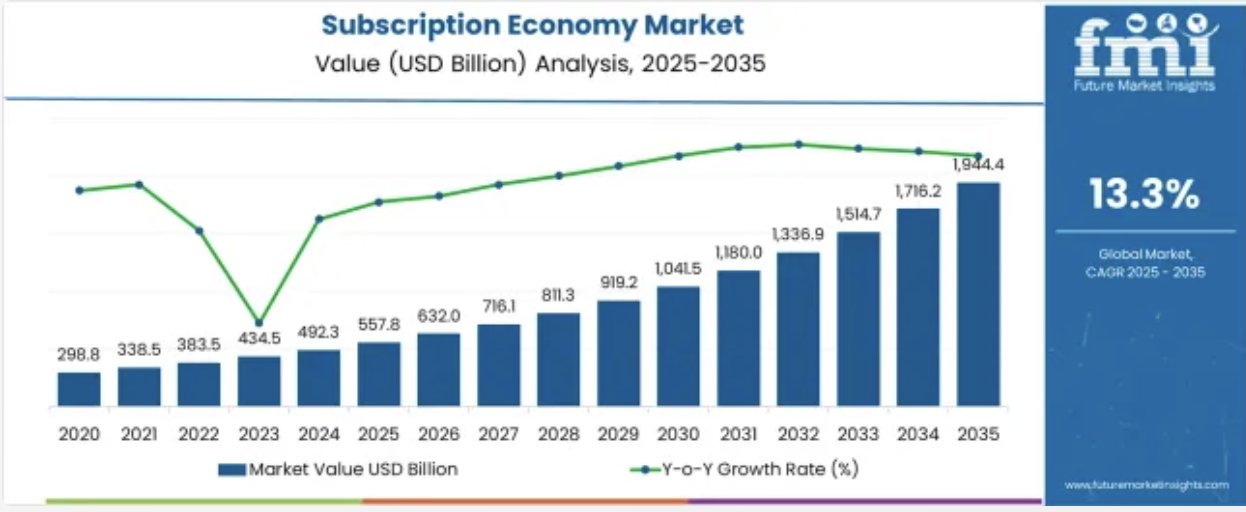
Figure 1: Annual growth trend statistics and projections for the global subscription economy market in terms of market value and year-over-year growth rate
At the base of corporations’ intentions is monthly recurring revenue (MRR). MRR is a metric used by companies to calculate the amount of money they can expect for upcoming months based on recurring customer payments. Subscription-based products allow companies to have a steady MRR, which guarantees them a predictable amount of money in the coming months. High MRR is what can bring credibility to a company, attracting investors. Another appeal is customer lifetime value (CLV) compared to one-time purchases. CLV is how much a company can expect to be paid by an individual throughout their lifetime, and monthly subscriptions allow for the most predictable CLV. Put simply, a company would rather have a customer pay $5 monthly for years to come than sell that same product for $60 once. Continuous payments also allow for a flexible price that one-time payments do not offer. The average subscription has gone up 20% since 2020, with some of the most popular services such as Disney+ and AppleTV+ more than doubling. Additionally, even though prices rise, studies show that the majority of customers will remain with the company due to built-up inertia. The ability to change the price in an instant, therefore massively raising their MRR and CLV, is what these companies thrive on.
Now why has society bought into subscriptions? In short, it boils down to the illusion of saving money. While services may appear cheaper because paying for one month of a subscription is significantly cheaper than what the service is worth, it is all a facade. This psychological effect of a “low barrier of entry” makes it easier for customers to pay for one month of a subscription. This is the same logic that fuels Buy Now Pay Later (BNPL) models like Klarna. 29% of BNPL users say they’ve used the loans for groceries, up from 25% a year ago and 14% two years ago; 38% of Gen Z users have bought groceries with BNPL. At its base, BNPL models are subscriptions, and the illusion of saving money by splitting purchases up into minuscule payments is the same trap as subscriptions. Furthermore, companies may employ sign-up bonuses that further appeal to consumers to purchase their product. Many pick up these bonuses and promise to cancel their subscription after it is over; however, with the average American juggling 8.2 subscriptions, this is usually not the reality.
Businesses’ largest trap based on subscriptions is not the price or psychology: it is humanity’s laziness. A study from The Ohio State University found that, on average, a person spends more than $200 on unused subscriptions every year. Moreover, studies show that consumers who spend about $219 per month on subscriptions estimate they spend about $86. That is a 250% difference. This discrepancy can mainly be attributed to people simply forgetting to cancel subscriptions they no longer use, whether it is one they signed up for with a sign-up bonus or one they used to use. However, even when consumers remember their active subscriptions, psychological factors may prevent them from hitting cancel. For example, loss aversion is the cognitive bias of a person in which the pain of losing something is twice the amount of the pleasure of gaining something equivalent. This can be applied to subscriptions as well because once a customer has access to a service, they cannot bear the thought of losing it. Customers do not want to lose the playlist they have been crafting, the show they are watching, or their fast shipping. Once they have a taste of luxury, it is hard to go back.
The subscription business is a brilliant, trillion-dollar industry that has become a staple of society today. However, these companies are playing into the laziness of humans by forcing the responsibility of financial discipline onto them in managing these recurring payments. Now, this is not to say that subscriptions are all bad. If played and managed correctly, they can actually be more beneficial by allowing access to premium services for a low cost. This article is more of a wake-up call that, as we approach adulthood, remember that if you are not paying attention to your finances, you are just paying.
Enjoyed this article?
Subscribe to get the latest economic analysis delivered to your inbox.
Comments
Related Articles

The Economics of Exclusivity
A pair of sneakers costing the manufacturer $100 may sell for $4,000 nowadays. In today’s drop culture, brands are turning scarcity into...
The Rise of Pokémon and Sports Cards as an Investment-Grade Asset Class
Pokémon: a classic card game and show from many people's childhoods. What started off as a fun collectible and trading card amongst the...

Lunch With the HWER: Lessons from Gregory Nathan
Mr. Greg Nathan held a Q&A with students, hosted by the HW Economics Club on campus, where he provided his insights and wisdom on topics...