Is the National Debt Actually a Problem?
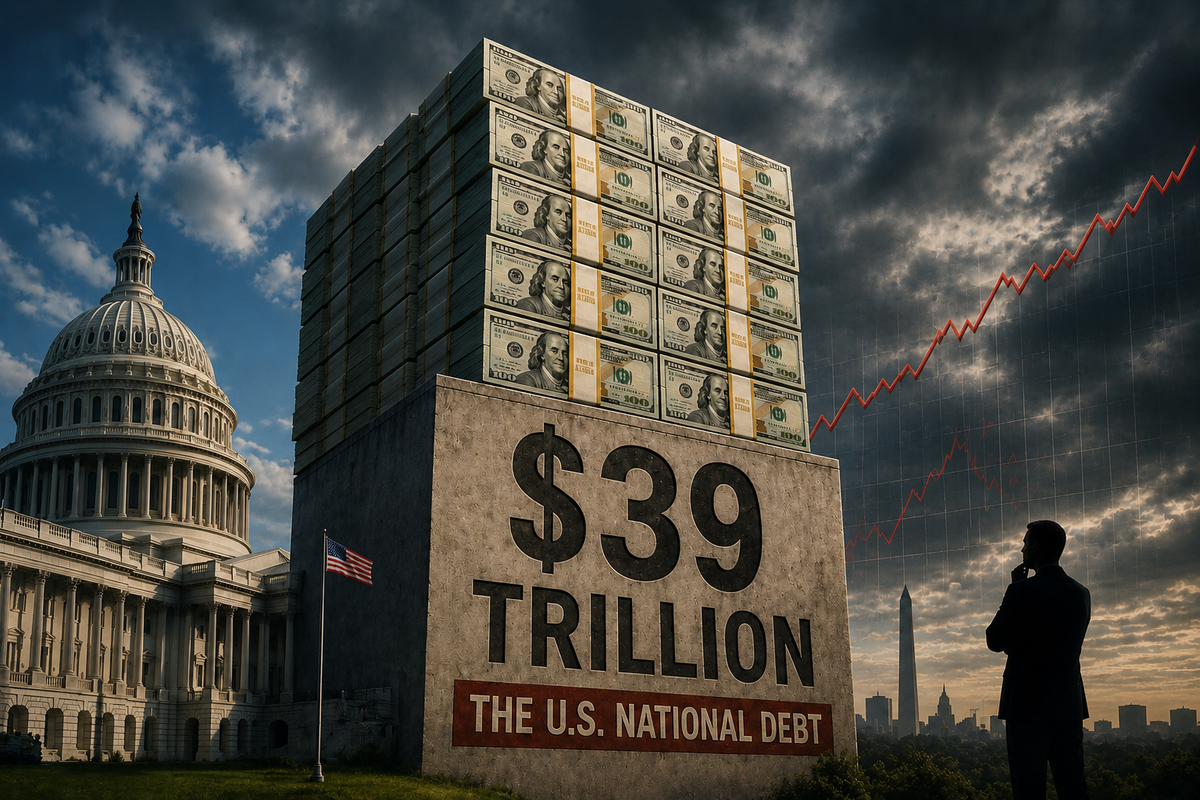
As of 2026, the United States national debt has surpassed a whopping $39 trillion. That number is so incredibly large that it is impossible for the human mind to truly comprehend. If you spent $1 million every single day, you would have had to start spending before the end of the last Ice Age (about 107,000 years ago) to reach $39 trillion today. If you were to stack $39 trillion in $100 bills, the stack would reach way past the Moon, stretching nearly 250,000 miles into space. Scary, right? Well, this debt must be the biggest long term threat facing the American economy in that case. Or, is it a misunderstood statistic that politicians use to scare voters? Some people are convinced the debt will eventually bankrupt the country, and some people are convinced that the debt barely matters at all. As with most economic issues, the truth lies somewhere in between. To understand whether America's debt is actually a problem, we first need to understand what the national debt is, who owns it, and why the government keeps borrowing all this money in the first place.
What Is the National Debt?
In layman’s terms, the national debt is the accumulation of all the money the federal government has borrowed over time. Every year, the government collects money through taxes and spends money on things like Social Security, Medicare, defense, infrastructure, and interest payments. When the government spends more than it collects, it runs a deficit. That deficit has to be financed somehow, so the government borrows money.
A simple way to think about it is through a household budget. Imagine a family that earns $100,000 per year but spends $110,000. That family runs a $10,000 deficit. If it does this year after year, those deficits eventually become debt. The federal government operates similarly, although there are some important differences that we will get to later. For decades, the United States has spent more money than it has collected, and as a result, the debt has continued to grow.
Who Does America Owe Money To?
One of the biggest misconceptions about the national debt is that America owes all of its money to foreign countries. In reality, a large portion of the debt is owned by Americans. When the government needs to borrow money, it sells Treasuries. Investors purchase these securities and receive guaranteed interest payments in return.
Some examples of buyers include:
- Individual retail investors like you or me
- Pension funds
- Mutual funds
- Banks
- Insurance companies
- The Federal Reserve
- Foreign governments
China and Japan do own significant amounts of U.S. debt, but they do not own most of it. In many ways, the national debt represents money that the government owes to investors who voluntarily lent it money.
How Hasn't the Government Already Gone Bankrupt?
Whenever people hear that America owes $36 trillion, a common question follows: Why hasn't the government gone bankrupt? The answer is that thankfully investors still trust the United States. Treasuries are generally considered among the safest investments in the world, so much so that many people literally call them “risk free”. The U.S. government has an extensively long history of paying its obligations, and investors believe it will continue doing so.
There is also another important factor, however, which is that the United States issues debt in its own currency. Unlike a household or a business, the federal government controls the currency that its debt is denominated in. This doesn’t mean the government can create unlimited money without consequences, but it does give the policymakers more flexibility than most borrowers. As long as investors continue purchasing Treasuries, the government can continue refinancing existing debt and borrowing additional money when necessary.
Why Some Economists Are Worried
Just because the government can borrow money doesn’t mean there aren’t any risks, though. The biggest concern isn't even necessarily the debt itself, it’s the growing cost of servicing that debt. Every year, the government must make interest payments to everyone that owns treasuries. As the debt grows and interest rates rise, those payments become larger. In recent years, interest payments have become one of the fastest growing categories of federal spending. This creates a big problem, which is that the money spent paying interest can’t be spent elsewhere. Every dollar that goes to servicing debt is a dollar that can’t be used for infrastructure, education, defense, scientific research, etc.
Many economists also worry about the debt’s long term trajectory. If debt grows at a faster rate than the economy does forever, eventually the burden of the debt will become more difficult to manage. If, for example, the US population ages, healthcare costs rise, or the budget deficit only expands, this challenge will be even greater in the coming decades. The concern of these economists isn’t that America will suddenly collapse on a random Tuesday, but that over time the country can start to gradually lose fiscal flexibility over time.
Why The Debt Doesn’t Have Every Economist Perturbed
The concerns are definitely valid, but don’t let the headlines sway you into thinking every economist is deeply alarmed. One reason is that the raw $36 trillion number can actually be somewhat misleading. A more useful measurement, the debt to GDP ratio, takes into account how big the economy that carries the debt is. The reason this metric is valuable is that a person that earns $1 million a year can reasonably take on more debt than someone earning $30,000 per year. The United States is also still the largest economy in the world, and the U.S. dollar continues to serve as the dominant global reserve currency, creating strong demand for Treasuries. Some economists have pointed to countries like Japan, which have maintained high debt levels for years without ever experiencing a fiscal crisis.
Others argue that as long as the economy grows, debt becomes easier to manage over time. If the economy expands faster than the debt, the burden can gradually shrink even if the total dollar amount continues rising.
Can the Government Reduce Debt?
If the debt continues growing, how can our government reduce it? Luckily there are several possibilities.
The first is running budget surpluses, which means collecting more revenue than is spent. In theory, those surpluses can be used to pay down debt. The second is sustained economic growth, seeing as if GDP grows rapidly, debt therefore becomes smaller relative to the overall economy. The third is intentional inflation. Inflation reduces the real value of the currently existing debt because future dollars become worth less than today's dollars. While this can make debt easier to manage, it also comes with the fact that by definition costs for consumers and businesses rise.
In theory, the growing demand for Treasuries from institutions, foreign investors, and even the likes of stablecoin issuing companies could help the US government with its debt problem. That being said, it probably won’t solve America's fiscal challenges by itself. Contrary to what your favorite politician or your grandpa may say, there is no magical solution, and every path involves tradeoffs.
So, Should We Be Worried?
Yes and no.
The national debt is not an immediate emergency that will suddenly crash the American economy next year. The United States is still pretty wealthy, productive, and capable of borrowing at a scale that very few countries can match. At the same time, it’s difficult to argue that debt can grow faster than the economy forever without any consequences. The debt is best viewed as a long term challenge rather than a short term crisis, even though politicians often portray it as one or the other. The reality of the situation is far less dramatic that anyone makes it out to be.