
The Economics of AI
How will AI impact the world? This article provides a nuanced opinion on the debate that has captivated the attention of millions.
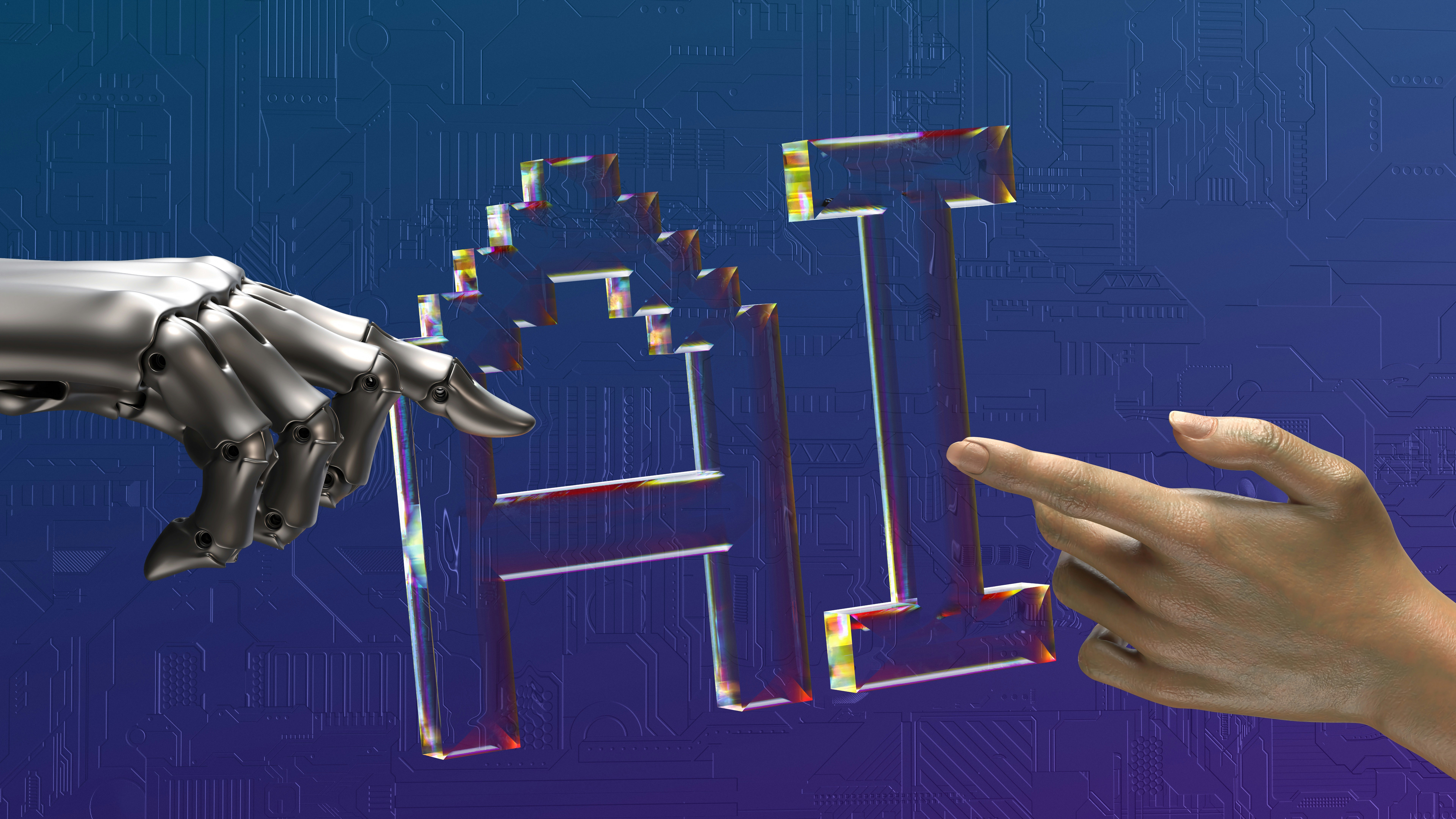
Will AI Create More Jobs Than It Destroys?
It feels like every few months we get a new headline claiming that artificial intelligence is about to replace millions of people’s jobs. One week it's software engineers, the next week it's lawyers, and the week after that it's accountants. At the same time, huge tech companies continue spending hundreds of billions of dollars building out AI infrastructure while investors continue to fuel the stock prices of the hyperscalers. Clearly, a lot of people believe AI is going to change the economy. Is that necessarily a good thing though?
My own outlook on this has changed quite a bit over the past year, and I seem to oscillate between believing that AI will create an era of unprecedented prosperity and that AI could trigger the largest wave of unemployment in recent history. A popular argument for the benefit of artificial intelligence is that it will make workers dramatically more productive and eventually create entirely new industries that we can't even imagine today, just as the internet did decades ago. Critics worry that this time is different, and that AI is not simply replacing human muscle like previous technologies did, but rather replacing certain forms of human thought itself. As with most economic questions, the truth is probably somewhere in the middle.
We've Been Here Before
At first glance, the pessimists seem to have a strong case. After all, most previous technologies automated physical labor; tractors replaced farm workers, factory machines replaced assembly line jobs, cars replaced horses, etc. AI feels different because it is targeting jobs that many people assumed were safe. To a certain extent, an LLM can draft an email, summarize a legal document, write computer code, analyze financial statements, and answer customer questions. These are tasks that were once performed almost exclusively by educated white-collar workers.
The problem is that we've heard similar warnings before. During the Industrial Revolution, workers feared that machines would permanently eliminate jobs. Some became so concerned that they physically destroyed factory equipment, believing that the machines were taking away their livelihoods. Yet despite these fears, unemployment did not permanently skyrocket. Many jobs did disappear, but eventually new industries emerged, businesses expanded, goods became cheaper, and entirely new professions were created.
The same thing happened with computers. When computers first entered offices, many people assumed they would eliminate huge portions of the workforce. Instead, they transformed the nature of work itself. Jobs like switchboard operators and typists became less important, but software developers, IT specialists, cybersecurity experts, and digital marketers emerged in their place. Historically speaking, technology has been much better at changing jobs than eliminating work altogether.
The Optimism Around AI
The reason so many economists are optimistic about AI ultimately comes down to productivity. Productivity measures how much output a worker can produce in a given amount of time. While it sounds like a boring economics term, productivity is one of the biggest reasons living standards improve over time. If workers can produce more goods and services without working additional hours, the economy grows. Imagine a lawyer who previously spent three hours reviewing documents and now spends thirty minutes doing the same task with the help of AI. The lawyer wasn't replaced, but their productivity increased dramatically. The same logic applies to programmers, accountants, researchers, marketers, and countless other professions. If enough workers become more productive, businesses can grow faster, wages can rise, and consumers benefit from lower costs and better products.
This is why many economists view AI less as a replacement for workers and more as a tool that makes workers more effective. The internet did not eliminate the need for human workers; instead, it allowed workers to accomplish more. With AI, we could be witnessing a similar shift, albeit on a much larger scale and much faster.
The Jobs Most at Risk
If history teaches us anything, it is that technological progress rarely affects everyone equally. Some jobs benefit enormously while others disappear entirely. The occupations most vulnerable to AI tend to involve repetitive information processing. Basic data entry, routine customer service, simple bookkeeping, and certain administrative tasks all fit this description. These jobs often have very predictable patterns, which makes them easier for AI systems to replicate.
Ironically, many of the jobs people once considered safe are now starting to seem not so safe and could see greater pressure than some forms of physical labor. An AI can draft a report, summarize a meeting, or generate a marketing plan. It cannot (yet) easily repair a broken water pipe, install electrical wiring, or remodel a kitchen. As a result, some economists believe AI could disrupt white-collar professions more heavily than blue-collar professions, at least in the near future.
The bigger concern isn't necessarily that jobs will disappear forever though; it's that workers may not be able to adapt quickly enough. A technological transition that takes fifty years is very different from one that takes five. Even if new opportunities eventually emerge, it’s very possible that millions of workers could still experience significant disruption in the process.
Could This Time Really Be Different?
This is where the plot thickens. Historically, new technologies replaced human muscle. AI is attempting to replace certain forms of human reasoning, which is an important distinction. A steam engine could not become an accountant. AI systems, however, are increasingly capable of performing tasks that were once considered uniquely human. Every month at this point, they become better at writing, coding, analyzing information, and answering questions.
This makes AI fundamentally different from previous technological revolutions. If machines can perform both physical and cognitive tasks, where exactly do the displaced workers go? Historically, workers moved from farms into factories and from factories into offices. If AI becomes capable of performing large portions of office work as well, job creation may not keep pace with job destruction.
At the same time, it is worth remembering how often humans underestimate their own ability to adapt. Very few people in 1900 could have predicted professions such as app developers, social media managers, data scientists, or cybersecurity analysts. Entire industries emerged that would have sounded absurd just a few generations earlier. The same thing may happen with AI.
So, Will AI Create More Jobs Than It Destroys?
The honest answer is that no one really knows. History suggests that technological revolutions ultimately create more opportunities than they eliminate. Every major wave of innovation has sparked fears of permanent unemployment, and so far those fears have never fully materialized. That being said, AI represents a unique challenge because it targets cognitive work rather than purely physical labor.
My guess is that both sides of the debate are partially correct. AI will almost certainly eliminate some jobs. It will almost certainly create new ones as well. The real question is whether society can manage the transition smoothly enough to avoid widespread disruption.
For students today, this debate is more than an interesting economic question. It is a glimpse into the labor market we will eventually enter. The future may belong not to the people who compete against AI, but to the people who learn how to use it most effectively. If that turns out to be true, then the biggest risk may not be AI itself, but refusing to adapt to it.
Enjoyed this article?
Subscribe to get the latest economic analysis delivered to your inbox.
Comments
Related Articles
The Price of Progress: Inside China's Semiconductor Industry
This article summarizes three interviews the writer conducted with industry professionals in China on the topics of Competition,...

The Economics of Exclusivity
A pair of sneakers costing the manufacturer $100 may sell for $4,000 nowadays. In today’s drop culture, brands are turning scarcity into...

Quantum: Is It the Future?
As billions in capital pour into quantum computing, the race to build reliable qubits has captivated companies seeking to capture the...