
The Economics of Exclusivity
A pair of sneakers costing the manufacturer $100 may sell for $4,000 nowadays. In today’s drop culture, brands are turning scarcity into profit, and consumers are willingly paying thousands. Why? It's not for the product itself, but for the hype, status, and thrill of owning something others can’t.
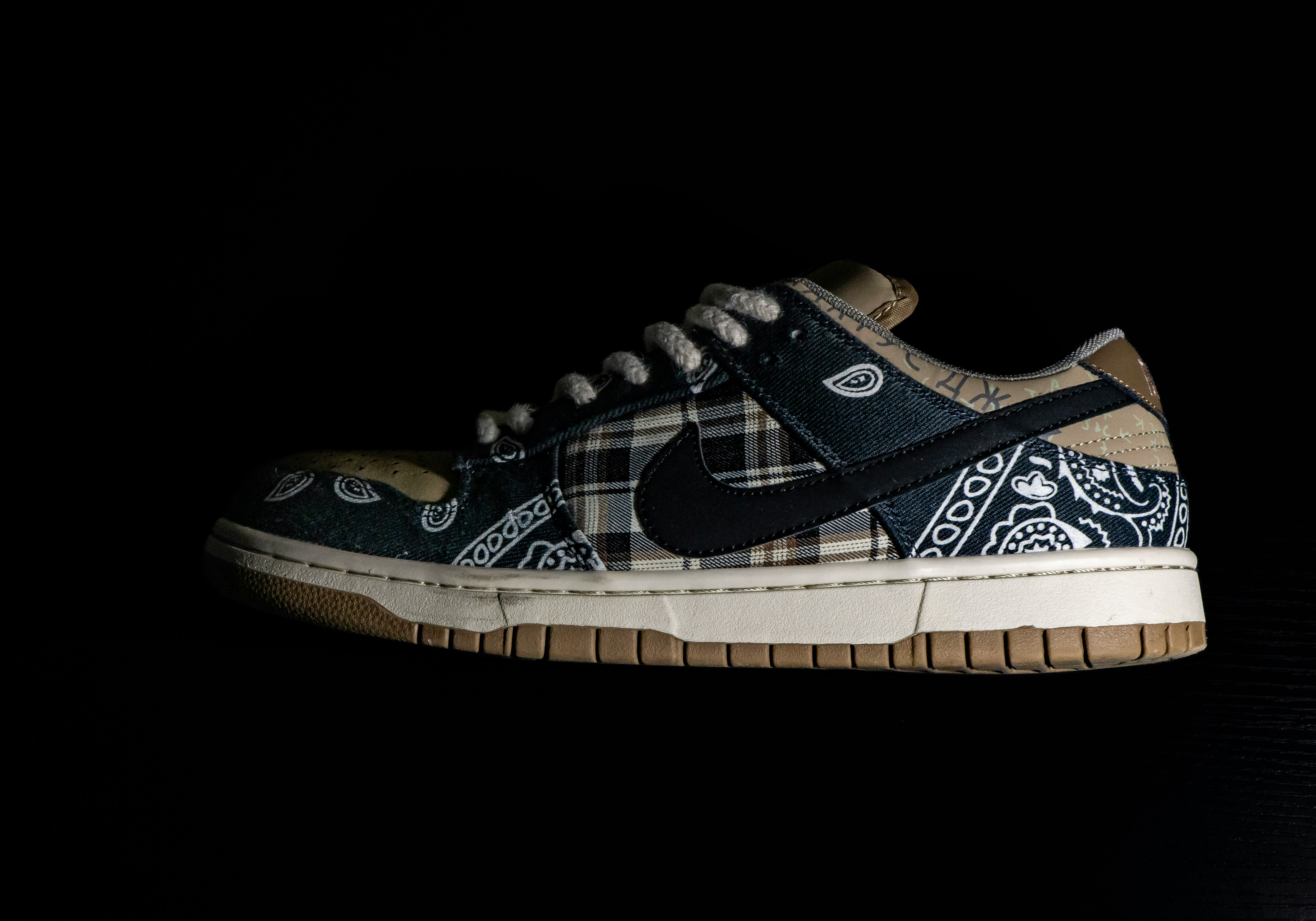
Expensive goods are rarely found in abundance, which has become a popular marketing strategy lately. It seems brands have leaned into the idea of limited or exclusive items to draw people in, artificially raising prices to extreme levels. For decades, global production trends have been based around mass production, getting the product to as many customers as possible. However, contemporary, youthful companies are embracing “drop culture,” which weaponizes artificial scarcity, creating highly speculative markets surrounding otherwise ordinary items. Whether it is in the form of luxury clothing, sneakers, or even various trading cards, it seems like the approach has been popularized throughout various niches. This begs two questions: how are brands benefiting from this, and why is the public embracing it?
The economic foundation behind this movement is the manipulation of supply and demand. Traditionally, businesses would manufacture an influx of a product, which would allow for accessibility and a high number of sales; however, excess inventory can turn into discounted merchandise, compressing the margin of those unsold items and diluting brand image. By marketing an item as exclusive, brands eliminate the risk of holding items for extended periods of time; if fewer items are produced, they are more likely to be sold at market price.1 In effect, as production drops and supply falls, demand rises, which is reflected in the price. Undoubtedly, this trend will continue. More limited items will be produced at low supply but high prices, but we have to ask: at what point do rare items become so abundant that they become standard and lose value?
To properly answer this question, it is essential that we examine the economic and psychological effects behind the customer consumption of such goods. In 1899, Norwegian economist Thorstein Veblen introduced the idea of “conspicuous consumption.” This is the idea of status around an item and how one may change their view of the value of an item based on the prestige that it carries. Veblen observed that in some luxury items, the idea of the supply and demand curve completely flips: as the price of goods rises, their demand closely follows.2 Illustrated below is a comparison between the effects of price on demand for Veblen versus normal goods. As shown, as the price decreases for normal goods, the demand increases; however, for Veblen goods, the demand increases as price increases. This idea is also called the Snob Effect, in which consumer behavior favors items that are perceived as popular or rare.3
Figure 2: The price versus demand curves of Veblen and normal goods

Items that follow this phenomenon are accordingly named Veblen goods and derive most of their value not from the practicality of the item, but from its status. By purposefully keeping production numbers low, companies are weaponizing this very concept, turning something as simple as a cotton hoodie or shoes into a potent means of social comparison. The material value of the item becomes overshadowed by the social construct driving its price. In this context, the exorbitant price tag placed on these items becomes an item’s most desirable trait, rather than a high barrier to entry.
Furthermore, the mechanics of the “drop” itself manipulate the market being built around an item. According to researchers, much of the consumer appetite for these exclusive items is fueled by something called the “Scarcity Principle”. This essentially encompasses the trend of humans to value items higher due to their limited and dwindling availability, making consumers pay more than they would normally.4 By harnessing aspects such as long queues, random drops, and countdown timers, consumers are forced into a “hot state” of decision-making, as Bob Simison wrote in an article in the Chicago Booth Review.5 In this state of high emotion and tension, customers are vulnerable to making rash and otherwise illogical decisions that push brand recognition. Instead, logic is replaced with a mixture of adrenaline, competitive drive, and, most potent, the fear of missing out. The fear of missing out, commonly referred to as FOMO, is a societal pressure ingrained in people’s minds that can cause decisions to be made out of fear of exclusion. The whole idea of a drop brings a novel competitive side to the market, making a purchase feel like an experience that the customer conquered over others. After winning, a triumphant feeling keeps people coming back for more, sometimes even losing sight of the fact that they are the ones making a purchase. The validation of the item's value in their mind and among their peers connects back to the idea of Veblen goods and how, if everyone could obtain these same items, they would hold almost no value.6
A frenzy created by limited drops has inevitably spilled over into the secondary resale market that has exploded in the past decade. As shown in the graph, the U.S. resale apparel market is experiencing explosive growth, outpacing the broader retail clothing sector by 15 times in 2023. This rapid expansion is driving the total secondhand market toward a projected $73 billion by 2028, with the resale segment itself set to overtake traditional non-resale secondhand sales by 2024.
Figure 1: Growth statistics and projections for the secondhand apparel industry in the US

A large part of this is driven by the increase in limited items that are bought and resold for wildly high margins by resellers. Because these items are so sparsely rationed by original manufacturers, the resale market can essentially set the price of the item completely unchecked by the manufacturer's suggested retail pricing. On modern digital reselling platforms, limited items from drops are seen as especially volatile, as prices fluctuate not by traditional economic principles, but by the sellers themselves. A shoe that retails for $150 may be sold immediately after primary stock sells out for over 10 times as much. A good example of this is the Audemars Piguet and Swatch collaboration watch that dropped on May 16, 2026. A global phenomenon when released, the drop had people all around the world waiting in front of their local Swatch shop just hoping to get a piece of this limited-edition watch. The watch retailed for $400-$420; however, the secondary market exploded the second after release, with sales reaching upwards of $4000, a near ten times increase in price. However, on the same day, when retail sales had concluded, Swatch announced that the release was not limited and that restocks were coming. Almost instantly, prices started falling on platforms like eBay and StockX, all the way down to about $1,200, a 72% price drop overnight.7 Releases like these exemplify not only the absurdity of the resale market, but also the vast difference in the way that a product is viewed once it goes from exclusive to ordinary. Brands also directly benefit from secondary markets by something called the “halo effect”. If consumers see that a brand’s items are being sold for an exorbitant price, they are likely to see the brand as a reflection of that price, later ensuring their next drop generates traction and their overall image is retained.8
Ultimately, the modern-day drop economy thrives by transforming standard goods into highly coveted social currency. By intentionally restricting supply, brands leverage psychological triggers and overall hype to elevate the prestige of their products. However, as with anything without intrinsic value, this is a highly fluctuating market that is prone to arbitrary ups and downs. The phenomenon of drop culture reveals an interesting truth about modern retail: we are not buying the item, but rather the thrill of the chase and the status of the finish line.
Notes
- Paul Williams, "The Scarcity Playbook: Applying the Drop Economy to B2B," Los Angeles Times, August 16, 2026, https://www.latimes.com/b2b/consumer-goods-retail/story/20seesaw,26-08-16/b2b-scarcity-strategy-drop-economy. ↩
- Joshua Ravichandran, "Veblen Goods: Why Sports Cars and Diamonds Don't Obey the Law of Demand," Michigan Journal of Economics, January 10, 2022, https://sites.lsa.umich.edu/mje/2022/01/10/veblen-goods-why-sports-cars-and-diamonds-dont-obey-the-law-of-demand/. ↩
- Corporate Finance Institute, "Veblen Goods," Resources, Economics, last modified November 19, 2019, https://corporatefinanceinstitute.com/resources/economics/veblen-goods/. ↩
- Abigail Ward, "The Psychology of Scarcity: How Luxury Brands Engineer Desire," EHL Insights, September 8, 2026, https://insights.ehl.edu/scarcity-exclusivity-luxury-branding. ↩
- Bob Simison, "How Human Psychology Explains Exclusive Brands and Exclusionary Policies," Chicago Booth Review, January 13, 2021, https://www.chicagobooth.edu/review/how-human-psychology-explains-exclusive-brands-and-exclusionary. ↩
- Shaarwin Bansal, "Scarcity Marketing: How Brands Manufacture Value Out of Thin Air," Analyst's Corner (blog), Medium, August 25, 2025, https://medium.com/analysts-corner/scarcity-marketing-how-brands-manufacture-value-out-of-thin-air-cdbe3a190acb ↩
- Robert A., "Swatch x Audemars Piguet Royal Pop: The 72% Market Crash, Explained," WatchGuys, May 19, 2026, https://www.watchguys.com/blogs/watch-news/swatch-audemars-piguet-royal-pop-market-crash. ↩
- Los Angeles Times, "The Scarcity Playbook." ↩
Enjoyed this article?
Subscribe to get the latest economic analysis delivered to your inbox.
Comments
Related Articles

The Advantages of Photonic Technologies: A Step Closer to Sustainability Within AI Data Centers
AI data centers are driving a surge in Photonics as demand for faster, more energy-efficient technology grows.

The Prosperity Paradox: Can America Bring Back Factories and the Security Workers Expect?
The recent growth in American factory production is reshaping the manufacturing sector, but automation, wages, and worker access complicate...

The Housing Crisis in China: Causes, Effects, and Global Comparisons
China's housing crisis comes down to a fundamental problem: in many cities, urban shortages persist as hundreds of millions of residential...