
The Price of Progress: Inside China's Semiconductor Industry
This article summarizes three interviews the writer conducted with industry professionals in China on the topics of Competition, Innovation, and Growth.
Introduction & Context For The Interview
Semiconductors are used in nearly every electronic device we rely on, from smartphones and Wi-Fi routers to electric vehicles and AI systems. But while demand for chips continues to grow, the companies developing them face a complicated challenge: how do they keep improving their technology without sacrificing profitability?
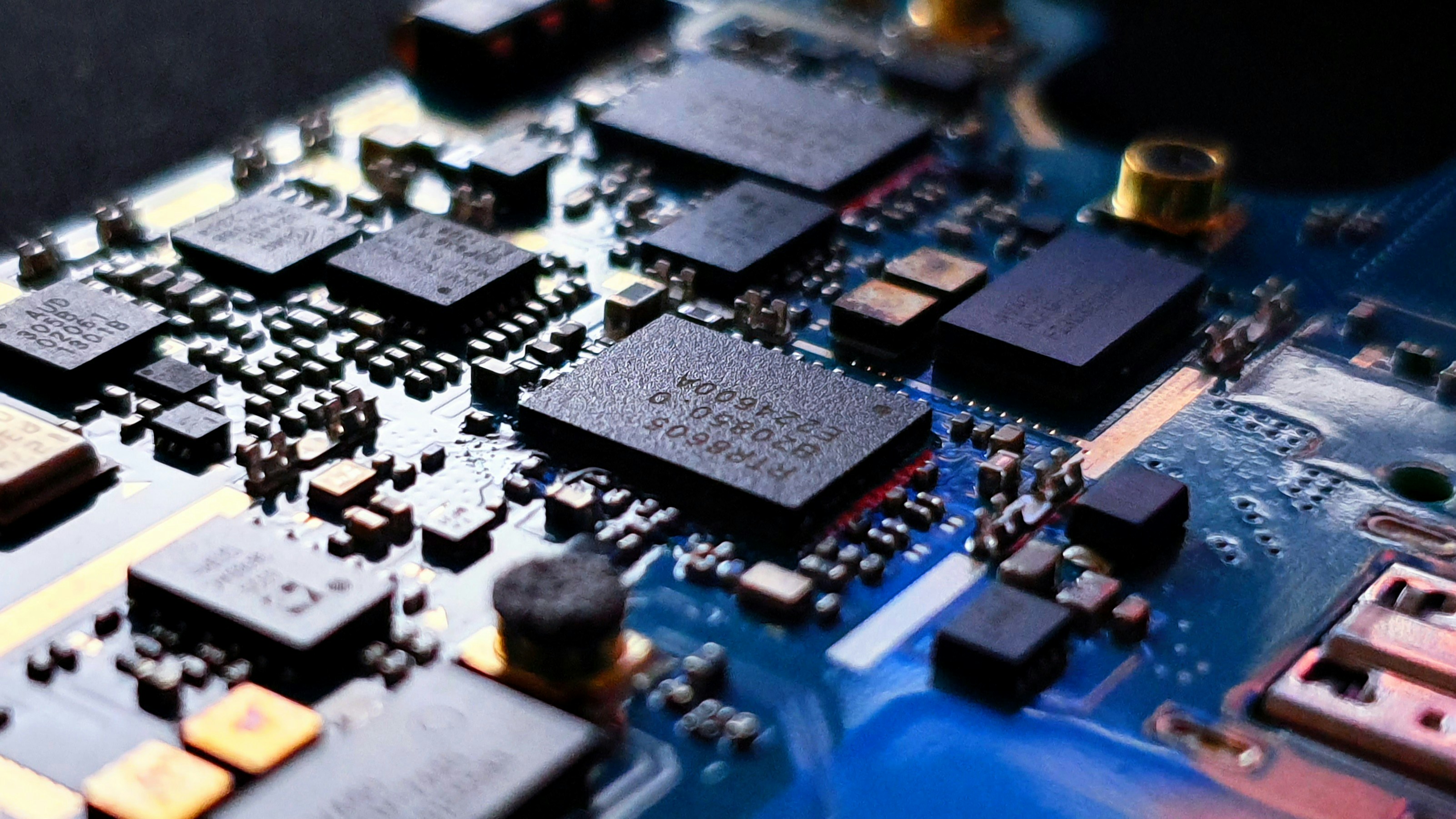
This summer, I had the opportunity to intern at Grand Kangxi Communication Technologies (Kangxi), a Chinese semiconductor company founded in 2014 that specializes in radio-frequency front-end chips. These chips help devices like smartphones and Wi-Fi routers send and receive wireless signals, making them an important part of everyday wireless communication.
During my internship, I spoke with three senior executives about the challenges they face in running the business. I interviewed one of the company's founders (CEO), its Chief Financial Officer (CFO), and a senior sales executive. Each conversation gave me a different perspective on the same industry, from long-term strategy and research investment to financial decisions and customer relationships. What surprised me most was learning that even significant technological improvements do not always lead to higher profits. Instead, the executives explained how competition, geopolitics, and financial constraints can make running a semiconductor business much more difficult than simply developing better chips.
SECTION I: CEO & Founder — Long-term Strategy & The Future Of Chinese Semiconductors
How Has Geopolitical Pressure Changed the Company's Original Vision?
When Kangxi was founded in 2014, the original goal was to combine the strengths of the United States and China. The company planned to use American technology and customer relationships alongside China's lower-cost manufacturing and supply chains to build products for the global market. However, the founder explained that growing tensions between the two countries changed this vision. U.S. restrictions on Chinese technology companies, along with disputes involving American semiconductor firms, made it much harder to expand internationally. As a result, the company became far more dependent on the Chinese and Asian markets than originally intended. Rather than treating this as a competition in which one country must defeat the other, he believed that American and Chinese companies should find ways to cooperate. American companies still lead in many advanced technologies, while Chinese companies can often produce competitive products at lower costs. His goal is to find markets where both sides can benefit instead of competing for every customer.
When Is It Worth Investing in Technology That May Not Be Profitable?
The founder explained that some of the company's most important decisions involved investing in technologies that initially seemed too risky or expensive. Early on, Kangxi focused on CMOS radio-frequency technology, but larger manufacturers began integrating similar components directly into their chips, reducing demand for the company's original products. The company had to change direction, even though developing alternative technologies required significant investment with no guarantee of success. Kangxi eventually shifted toward compound-semiconductor technology to develop higher-performance RF components, including power amplifiers and switches. Although this required substantial investment and carried significant risks, the resulting products outperformed its earlier CMOS designs and helped Kangxi establish a major supplier relationship with Huawei. Looking back, he considered it one of the company's most important breakthroughs. However, he also acknowledged that many research projects fail. His main principle was that R&D should focus on what customers actually need, rather than simply developing the most advanced technology. "We are never R&D driven; we are customer-driven," he explained. Even when a project fails financially, it can still improve the team's technical knowledge and prepare them for future challenges.
Can Chinese Semiconductor Companies Eventually Match American Pricing Power?
The founder was confident that Chinese semiconductor companies could eventually achieve the pricing power and profit margins of leading American firms, although he believed it would take time. He explained that American companies have spent decades developing advanced technology, building customer relationships, and establishing the ability to define new products and standards. This gives them an advantage because customers are often willing to pay more for technology that competitors cannot easily reproduce. Chinese companies, meanwhile, have generally entered the market later and rely more heavily on low prices to compete. Still, he argued that this gap is not permanent. As Chinese companies gain experience and develop more advanced products, they should become less dependent on price competition. He also believed that Chinese companies need to develop a longer-term business mindset rather than constantly undercutting one another for immediate sales. Ultimately, he saw the basic principles of business as the same in both countries: create something valuable, satisfy customers, and earn enough profit to continue growing.
How Have Work and Family Life Changed Since Founding the Company?
Looking back on more than a decade of building Kangxi, the founder said that one of his original motivations was to achieve financial independence and provide a comfortable life for his family. Although he was proud of the company's success, he also admitted that entrepreneurship required sacrifices he had not fully anticipated. Years of intense work left him with less time for his family and personal interests, including music, singing, and playing instruments. As he has grown older and begun transferring more responsibilities to younger executives, he has slowly returned to some of those activities. He also reflected on how fortunate the company had been to survive in such a competitive industry, especially when many similar startups failed. His experience taught him that building a successful company requires persistence and adaptability, but that financial success should not come at the expense of everything else in life.
Are There More Opportunities for Young Entrepreneurs Today?
When I asked whether young people today have more opportunities than previous generations, the founder explained that opportunities are always available, although they change over time. "There are still many, many opportunities now. They've just turned into new opportunities," he said. He recalled entering university in China after the Cultural Revolution, when relatively few students could attend college and educational resources were limited. Today, students face different kinds of competition, but they also have access to technology, education, and financial resources that his generation never had. He pointed to artificial intelligence as one example of a field creating new opportunities. However, he emphasized that recognizing an opportunity is different from having the determination to pursue it. Entrepreneurship requires accepting uncertainty, working through setbacks, and staying committed to a goal even when success is not guaranteed. He also encouraged me to strengthen my foundations in math, science, economics, and languages, explaining that being able to communicate across cultures is especially valuable in international business.
SECTION II: CFO — Financial Decisions Behind The Technology
What Were the Company's Most Important Financial Turning Points?
Before answering my questions, the CFO explained several milestones that shaped Kangxi's financial development. The first was its founding in 2014, when the company began developing semiconductor technology with relatively limited resources. When she joined in 2016, much of its financing still came from individual investors, making it difficult to fund expensive research projects. That year, Intel's investment gave the company not only additional capital but also greater credibility with other investors. However, fundraising remained challenging until 2018, when U.S. restrictions on ZTE increased China's focus on developing its own semiconductor industry. Investors became more interested in domestic chip design companies, and Kangxi benefited from having already spent several years developing products. The next major milestone was its public listing in November 2023. She explained that going public did not automatically make the company more successful, but it created new financing opportunities and allowed investors to value the company through the stock market.
Where Does the Company Lose the Most Profit?
When I asked whether the company's profits were most affected by price competition, R&D spending, or other expenses, the CFO explained that profitability depends on several different factors. She divided them into gross profit, operating expenses, and taxes, but focused especially on the intense price competition within China's semiconductor industry. She described the problem using the Chinese term "neijuan," often translated as involution, in which companies repeatedly lower prices to compete for the same customers. To illustrate, she described how one company might offer a chip for one yuan, only for competitors to lower their prices to 0.9 yuan and then 0.8 yuan. Even though each company may be improving its technology, this constant undercutting can shrink everyone's profit margins. Instead of setting a price based on production costs and a reasonable profit margin, companies may have to match whatever their competitors are charging. She connected this behavior to China's history of economic insecurity, explaining that many businesses prioritize immediate survival over uncertain future returns. R&D creates another challenge because development is expensive and may take years before generating revenue. She supported continued investment in research but warned that spending must remain realistic relative to the company's sales and cash flow.
How Does the Company Balance Large Customers With Profitability?
Large customers such as major networking and electronics manufacturers can provide enormous orders, but they also have considerable power to negotiate lower prices. The CFO explained that Kangxi sometimes accepts a smaller profit margin on its first product for a new customer to establish trust. "For the first product, we'll offer a relatively low price," she explained. As the customer becomes more familiar with Kangxi's technology, reliability, and service, it may become more willing to collaborate on additional products. These later products can generate stronger margins because the company has already established trust. She also emphasized the importance of developing new products before competitors. If Kangxi can meet a customer's new requirement earlier than other suppliers, it may enjoy a period of stronger pricing power. However, that advantage gradually disappears as competitors catch up, so the company must continuously introduce better products.
Does Easy Access to Funding Make Competition Worse?
The CFO agreed that abundant investment can sometimes make competition more destructive. As China has encouraged semiconductor development, more companies have received funding to enter different parts of the industry. This support is important because developing chips requires large upfront investments, but it also means that many companies may compete for the same customers. Some firms are willing to sell products at extremely low prices, hoping to gain market share before they run out of money. The CFO compared this process to several horses racing toward a limited supply of food, with each willing to survive on less in the hope of eventually reaching a better position. Some succeed, while others exhaust their resources before becoming profitable. She also noted that government subsidies can have both positive and negative effects. They may help promising companies survive their early development stages, but they can also keep inefficient firms operating longer than the market would otherwise allow.
How Much Should the Company Spend on Product Quality?
Because semiconductor chips may be sold in tens of millions of units, product quality is extremely important. However, the CFO explained that different customers require different levels of reliability, so spending the same amount on testing every product would not make financial sense. A major networking customer may expect a chip to operate reliably for many years, requiring more extensive testing and quality control. A product designed for a shorter lifespan may not need the same testing intensity. Kangxi therefore adjusts some of its reliability requirements based on the application and customer, while maintaining essential final testing. She explained that every additional test requires time, equipment, and labor, all of which increase costs. The financial goal is to meet the customer's actual needs without spending unnecessarily on requirements that provide little additional value.
What Are the Advantages and Disadvantages of Being a Fabless Company?
Kangxi is a fabless semiconductor company, meaning it designs chips but outsources their physical production. It works with foundries such as TSMC and WIN Semiconductors to manufacture wafers, while other suppliers handle packaging and testing. The CFO explained that this model allows smaller companies to enter the semiconductor industry without spending enormous amounts of money building fabrication plants. However, it also means depending on suppliers that are much larger and more powerful. These manufacturers can increase prices, prioritize other customers, or delay production when capacity is limited. Kangxi faces similar pressure from its own large customers, who can negotiate lower selling prices. This leaves the company caught between powerful suppliers and powerful buyers. The CFO believed that the best long-term solution is to expand the company's scale and improve its technology so that both manufacturers and customers have stronger reasons to work with it.
How Does the Company Decide When to Continue or Stop an R&D Project?
The CFO explained that financial evaluation begins before a new product is developed. At the beginning of a project, the finance team reviews expected selling prices, manufacturing costs, research expenses, potential demand, and the number of units needed to break even. These estimates help determine whether the project is worth approving. However, once development begins, the company generally tries to finish the project unless the market changes substantially or the product becomes obsolete. She also reviews products that are already being sold at negative gross margins, meaning their production costs exceed their selling prices. In those situations, the company may try to reduce manufacturing costs, redesign the product, or replace it with a more profitable alternative. Still, she explained that discontinuing an unprofitable product is not always possible if an important customer depends on it. This showed me that financial decisions are not always as simple as stopping an investment when it begins losing money.
How Does the Company Choose Which Technologies to Invest In?
Kangxi develops products for Wi-Fi, smartphones, IoT devices, drones, and automotive communication, but the CFO explained that not every market deserves the same investment. Wi-Fi networking remains the company's core business, so keeping up with new standards such as Wi-Fi 7 and Wi-Fi 8 is a priority. Smartphone applications represent another large market, although the company faces stronger competition and is still working to expand its position. IoT offers opportunities across many smaller applications, including industrial equipment, drones, and connected utility meters. Automotive communication is also technologically important, but the CFO noted that its potential sales volume may be smaller than other product categories. Her approach was to consider market size, customer demand, technological capabilities, and the company's existing position before deciding where to invest.
How Will Artificial Intelligence Change the Company?
The CFO saw considerable potential for AI to improve efficiency, particularly in departments such as finance, human resources, and legal affairs. She explained that AI-assisted tools can help organize information, review documents, find job candidates, and perform repetitive administrative tasks. Digital systems have already helped the company's finance team manage an expanding number of businesses without increasing staff proportionally. However, she was also cautious about using AI with confidential financial information. Because Kangxi is publicly listed, leaking sensitive data could have serious consequences, so the company relies on established digital systems and limited local AI applications where appropriate. She expected AI to reduce some routine administrative work over time, allowing the company to devote more resources to engineering and research.
Have You Had to Make Financial Decisions That Hurt Employees?
One of the more difficult questions I asked was whether the CFO had ever needed to reduce spending or employment even though she knew the decisions would affect workers and their families. She explained that Kangxi reduced its workforce by approximately 10% in 2025, primarily because of performance concerns and organizational efficiency. She recognized that losing a job can be especially difficult when employment opportunities are limited, but argued that management also has a responsibility to employees who are performing well. Keeping an organization operating efficiently helps protect the company as a whole. She explained that the affected employees received severance compensation to reduce the immediate financial impact. Her response showed how difficult it can be to balance the financial interests of a business with the personal consequences of its decisions.
What Advice Would You Give Young People About the Future?
The CFO ended our conversation by encouraging young people to pursue work they genuinely enjoy rather than simply chasing money or entering a field because it seems profitable. She reflected on how her generation experienced China's economic transformation and often focused heavily on building financial security. That sometimes meant sacrificing family time and personal interests. She hoped that younger generations could use the opportunities created by that economic progress to make choices based more on their own passions. Although technology and AI will create new careers, she did not believe everyone should feel pressured to pursue a technical profession. Whether someone becomes an engineer, musician, doctor, or works in another field, she believed the most important thing is finding something meaningful to them.
SECTION III: Senior Sales Executive — Customer Relationships & The Challenge Of Competition
Why Is It Still Difficult to Raise Prices After Technology Improves?
The sales executive explained that improving a product does not automatically give a company more pricing power. What matters is how many competitors can achieve similar performance. He illustrated this with a hypothetical scale from zero to 100. At a performance level of 60 or 70, many companies might offer similar products, making it difficult to charge higher prices. At 90 or above, there may be only a few capable competitors, allowing a company to earn stronger margins. He used Kangxi's progress from Wi-Fi 5 to newer Wi-Fi standards as an example. As its technology improved, the company began competing against more advanced international manufacturers rather than primarily lower-cost suppliers. However, he also pointed out that a chip with the highest possible performance is not necessarily the best product if it costs too much. Customers ultimately care about the value they receive relative to the price they pay.
Do Customers Prefer Chinese or Foreign Semiconductor Products?
When I asked whether customers were becoming more willing to purchase Chinese chips, the executive said that many still prefer established foreign brands when price and performance are similar. Companies such as Skyworks have built reputations over many years, and customers may view their products as more reliable. However, U.S. export restrictions have encouraged Chinese manufacturers to reconsider their dependence on foreign components. The executive explained that these restrictions created opportunities for domestic semiconductor suppliers because customers wanted to reduce the risk of losing access to imported products. He even joked that "Trump is the biggest salesperson for China's entire semiconductor industry," referring to how American restrictions have encouraged Chinese companies to seek domestic suppliers. Still, he acknowledged that foreign manufacturers continue to lead in many technological areas. He believed domestic companies must eventually win customers through better products and competitive prices, rather than depending only on geopolitical circumstances.
What Makes Customer Relationships So Important?
The executive explained that semiconductor sales depend on much more than presenting a product's specifications. Building a relationship with a major customer can take considerable time because customers need confidence that a supplier will deliver reliable products and respond quickly when problems arise. He also emphasized that communication can make a major difference. Some customers are easy to work with, while others may have different expectations or communication styles. When I asked whether he had ever lost an important customer because of factors outside his control, he did not identify a specific incident. Instead, he described how relationships that initially seemed difficult sometimes developed into successful partnerships. His experience showed that patience and trust can be just as important as technical knowledge when working with customers.
What Do Customers Care About Most When Choosing a Chip?
According to the executive, customers primarily consider whether a product offers good performance for its price. A small difference in component cost may seem insignificant, but when a manufacturer purchases millions of chips, that difference can become substantial. Reliability and technical support also matter because customers need suppliers that can respond quickly to issues during product development. The executive explained that an established relationship can give a supplier an opportunity to discuss pricing concerns before a customer switches to a competitor. Without that relationship, the customer may simply purchase a cheaper alternative. For this reason, he believed that a good sales team needs to understand both the technical requirements of the product and the business pressures facing the customer.
What Is the Hardest Part of Competing in the Semiconductor Industry?
The executive described semiconductor entrepreneurship as especially difficult because companies need both strong technology and an effective business organization. Even an excellent sales team cannot consistently sell a product that lacks a competitive advantage. At the same time, a strong engineering team may struggle if the company cannot understand customer demand, manage financing, or bring its products to market. He emphasized the importance of assembling a team with complementary skills across engineering, sales, management, and finance. He also pointed out that the successful semiconductor startups we hear about represent only a portion of the companies that tried to enter the industry. Many others failed before their products became commercially successful. This made me realize how much coordination is required between different parts of a business, even when the final product is extremely small.
What Do Executives Worry About That Outsiders Rarely See?
One question I found particularly interesting was what executives worry about internally that customers or investors might not notice. The executive explained that companies naturally emphasize their strengths when presenting themselves publicly, but internal discussions are often much more cautious. Leaders must constantly evaluate competitors, weaknesses in their technology, and possible changes in demand. He described this mindset using the Chinese expression "战战兢兢,如履薄冰," meaning to act with extreme caution, as if walking on thin ice. Even if Kangxi has a successful Wi-Fi 7 product, that does not guarantee the same position in Wi-Fi 8. Another company could invest earlier, develop stronger technology, and take away market share. He believed that the moment a company becomes too comfortable with its success is when it risks falling behind.
How Has the Company Changed Since You Joined?
The executive described how Kangxi had developed since he joined in 2019. At the time, the company was still building its sales organization, customer relationships, and internal management systems. As its technology improved and sales increased, its operations became more structured. However, he also explained that growth creates new challenges. After going public, the company had to place greater emphasis on compliance, reporting, and internal controls. Although these systems are important, they can also slow down decision-making. He believed Kangxi should avoid becoming unnecessarily bureaucratic and continue operating with the flexibility of a smaller company. In a fast-moving industry, the ability to respond quickly to customers and new technologies remains a major advantage.
How Much Personal Sacrifice Does Success Require?
When discussing his career, the executive acknowledged that helping Kangxi grow required significant time and effort outside normal working hours. Building customer relationships, traveling for business, and responding to constant competitive pressure often meant spending less time with family. He also expressed respect for the company's founders, who had left established lives and careers to pursue an uncertain opportunity in China. Their willingness to take risks helped create the company that exists today. He credited family support as an important part of his own professional journey and acknowledged that balancing a demanding career with personal life is not always easy. His answer reminded me that the costs of building a company cannot be measured entirely in dollars.
What Does the Future Hold for Chinese Semiconductor Companies?
Looking ahead, the executive expected China's semiconductor industry to become more concentrated as companies mature. He pointed to the international semiconductor industry, where mergers and acquisitions have gradually reduced the number of major competitors in some markets. He believed something similar could happen in China as firms grow, specialize, and compete for market share. For Kangxi, he saw continued technological improvement and expansion into new applications as essential to its future. At the same time, he stressed the importance of maintaining a clear long-term direction and giving employees confidence in the company's plans. He remained optimistic about its potential, but emphasized that success would depend on continuing to improve rather than relying on past achievements.
Conclusions — What I Learned
Before my internship, I mostly thought about semiconductor competition in terms of technology. I assumed that if a company developed better chips, it would naturally be able to charge higher prices and earn more profit. After speaking with the three executives, I realized that the relationship is much more complicated. A company can invest millions of dollars into improving a product, only to find that competitors have made similar progress or that customers are unwilling to pay more.
What interested me most was how differently the three executives approached the same problems. The founder focused on long-term technological strategy and how geopolitical tensions changed the company's opportunities. The CFO looked at those decisions through costs, cash flow, and profitability, explaining why a promising investment may still be financially risky. The sales executive focused on customers and competitors, showing why even a technically strong product needs good pricing and reliable service to succeed.
I also learned that many of these challenges involve a tradeoff between short-term survival and long-term growth. Lower prices can help a company attract customers today, but they also reduce the money available for future research. Investing more in R&D may eventually create better products and stronger pricing power, but it can also threaten profitability if the returns take too long to arrive. This was a much more practical view of economics than I had encountered before, because the executives were making these decisions with real employees, investors, and customers depending on the outcomes.
More than anything, these interviews helped me understand what the price of progress really means. Developing better technology requires financial risks, years of investment, and often personal sacrifices from the people building the company. Even when that technology succeeds, companies still have to deal with competition, limited profits, and changing markets. Progress isn't just about making better chips; it's about turning those improvements into a sustainable business without losing sight of the people behind it.
Interview responses translated from Chinese where applicable, condensed, and edited for length and clarity.
Enjoyed this article?
Subscribe to get the latest economic analysis delivered to your inbox.
Comments
Related Articles

The Economics of Exclusivity
A pair of sneakers costing the manufacturer $100 may sell for $4,000 nowadays. In today’s drop culture, brands are turning scarcity into...

The Advantages of Photonic Technologies: A Step Closer to Sustainability Within AI Data Centers
AI data centers are driving a surge in Photonics as demand for faster, more energy-efficient technology grows.
The Prosperity Paradox: Can America Bring Back Factories and the Security Workers Expect?
The recent growth in American factory production is reshaping the manufacturing sector, but automation, wages, and worker access complicate...